
D3 Weekly — Nov 08 to Nov 15, 2026
Curated industry insights at the intersection of design, technology, and AI.
The design and AI communities converged on a single uncomfortable truth this week: the interface is no longer the product, and the human is no longer the user. From Chrome building decision models that run on your machine to Jensen Huang walking away from Nvidia, the conversation shifted from what can this do to who does this serve.
This Week’s Focus
The most interesting thread this week wasn’t a tool launch or a rebrand. It was a quiet reframing of what design work actually is when agents do the building. Hayden Bleasel’s piece on subtraction landed hardest: software used to be made like a painting, layer by layer, and now it’s closer to sculpture. The hard part isn’t adding. It’s seeing what to keep. That idea echoed everywhere, from Karolina Szczur arguing that design systems need translation across functions rather than rebranding, to Matt Stromawn’s case that design is fundamentally a search problem, groping around a dark room for a black cat.
The practical consequence is that craft is migrating upstream. The decisions you make before you touch a prompt matter more than the prompt itself. Meanwhile the labor market is telling its own story: Lenny’s late-2026 snapshot has PMs winning, engineers plateauing, and designers hurting. Read that alongside the AI mind tax piece and the picture sharpens. The people using these tools best are paying a cognitive price nobody budgeted for. The teams that win the next year won’t be the ones with the most agents running. They’ll be the ones who decided, deliberately, what to leave out.
Design
By taking away
Sidebar.io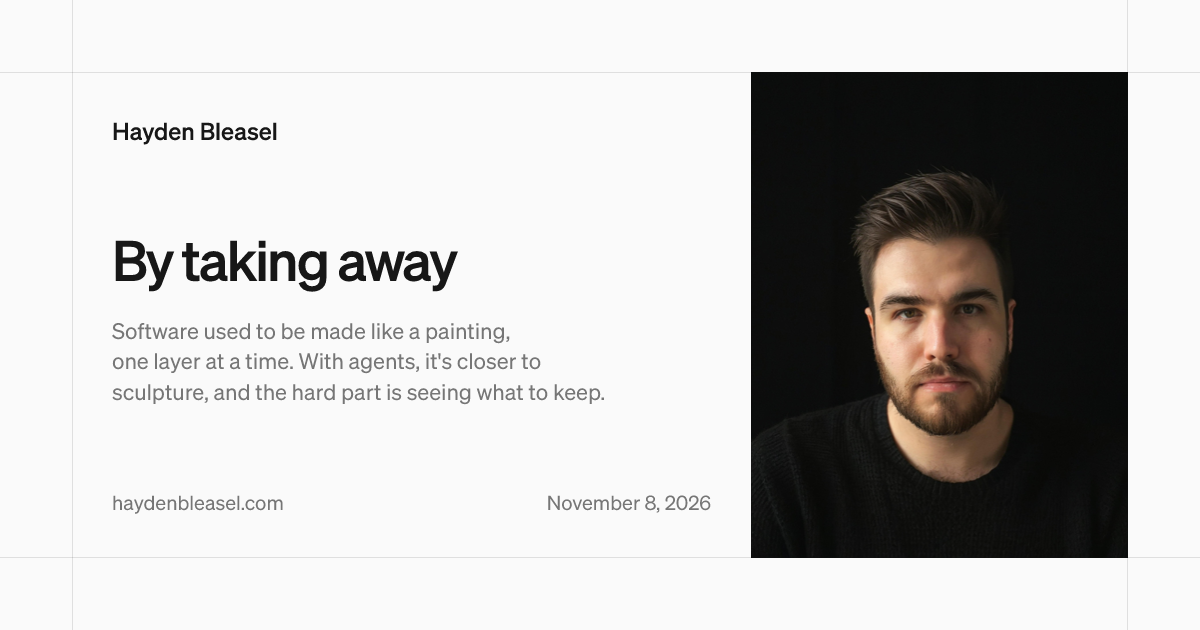
The best framing of the agent era I’ve read this week. Painting versus sculpture. With agents, the work is no longer accumulation, it’s editing, and the discipline is knowing what to cut. Short, sharp, worth your ten minutes.
There’s no better name for design systems
Sidebar.io
Karolina Szczur makes the case that the design system problem was never naming, it was translation across functions. Stop rebranding the thing and start teaching people how to talk about it. Directly useful if you’re the person who keeps getting asked to rename the system.
Design is a search problem
Sidebar.io
Most of what we call design is groping around a dark room looking for a black cat. Matt Stromawn reframes the craft as search rather than execution, which is a more honest description of how the work actually feels and a better mental model for pairing with AI.
Where the disabled button got its rule
Sidebar.io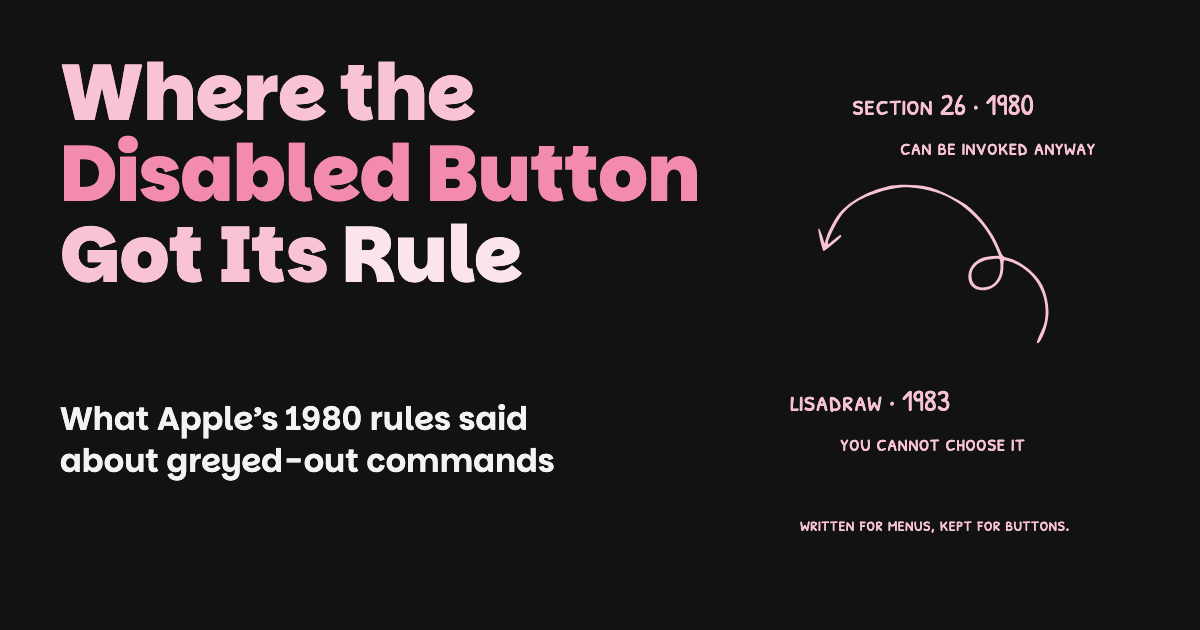
A genuinely delightful piece of interface archaeology. Apple’s 1980 rules on greyed-out commands, traced forward to the disabled button conventions we still follow without thinking. The kind of history that makes you question defaults you’ve never examined.
The beige era of product design
Heydesigner
Heydesigner’s weekly rounds up the sameness problem: borrowing Apple’s type scale, the new full-stack designer, AI prototyping inside your design system, and Adaptive Dark Mode. The beige critique is the throughline and it’s fair. Everything looks like everything else right now.
AI and Technology
Building interfaces that understand what we want to do
Sidebar.io
Chrome is building a Decisions API that runs a decision model locally, free and private. This is the most concrete signal yet that intent prediction moves on-device. If you design flows, read this and start thinking about what changes when the browser anticipates the next step.
The components of agent memory
Sidebar.io
For Claude to learn from experience, it has to decide what’s worth remembering before it knows what’s next. Anthropic’s research on agent memory is the technical backbone under all the product talk. Worth reading if you want to understand why your agent forgets the thing you told it yesterday.
Don’t make a human do what AI is amazing at
Sidebar.io
John Nunemaker’s Nunebot makes his apps a little better every day without him doing the tedious parts. A grounded, unglamorous example of AI doing maintenance work so a human doesn’t have to. More useful than most of the hype.
State of the tech job market: late 2026
Lenny’s Newsletter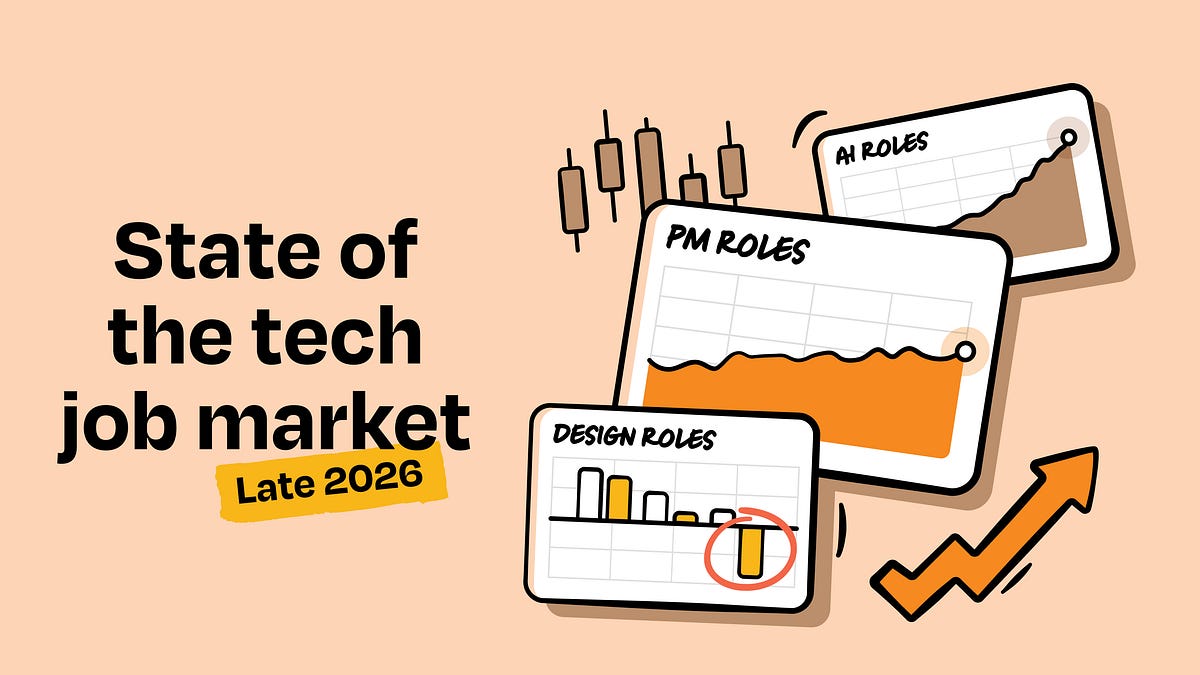
PMs winning, engineers plateauing, designers hurting, and the biggest AI hiring boom isn’t in software. If you lead a design org, this is the data you need to argue for headcount and to be honest with your team about where the pressure is coming from.
The AI spending boom has a problem: most companies spend very little
The Neuron AIRamp’s data shows a small group of companies accounts for most AI spending even as adoption rises and model prices fall. The boom is real but narrow. Useful counterweight to the assumption that everyone around you has already rebuilt their stack.
Craft and Practice
AI prototyping inside your design system: a hands-on guide
UX Collective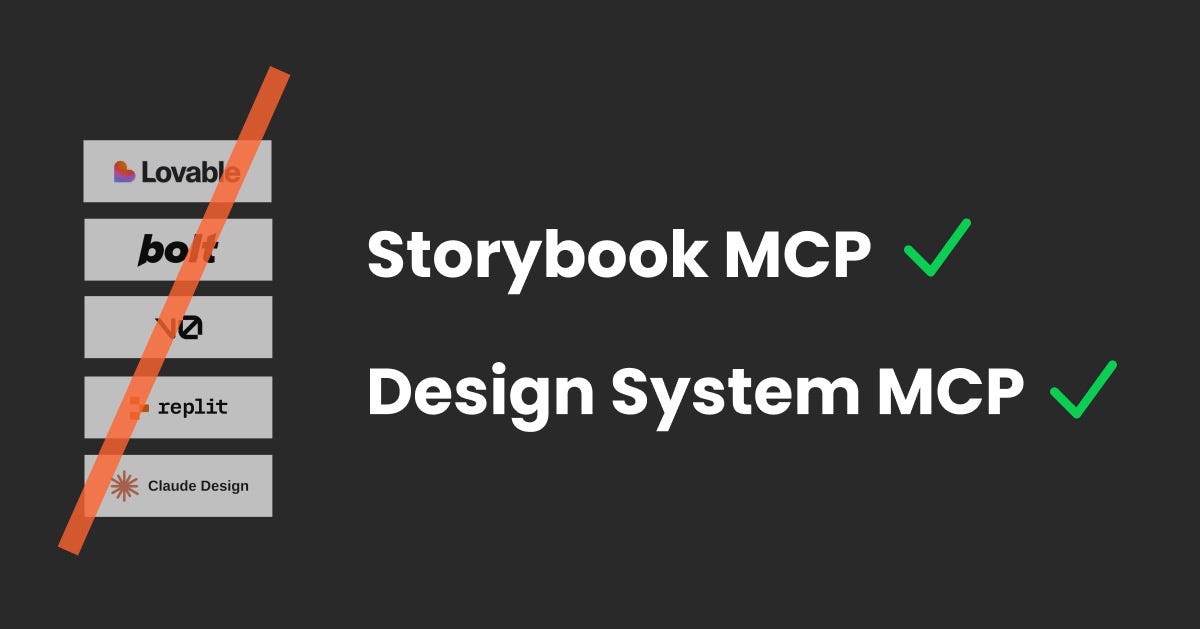
A practical walkthrough for design and product teams who want AI prototyping to produce something that actually respects their components. Pair it with the companion piece on going from code to Figma and back. This is the workflow question every design org is wrestling with right now.
The AI mind tax that afflicts those who use AI best
UX Collective
The people getting the most out of these tools are paying the highest cognitive price. A sharp diagnosis of the hidden cost of being the human in the loop, and a good argument for why your best people need protected thinking time.
Every click has a price now. Who designs how that “feels”?
UX Collective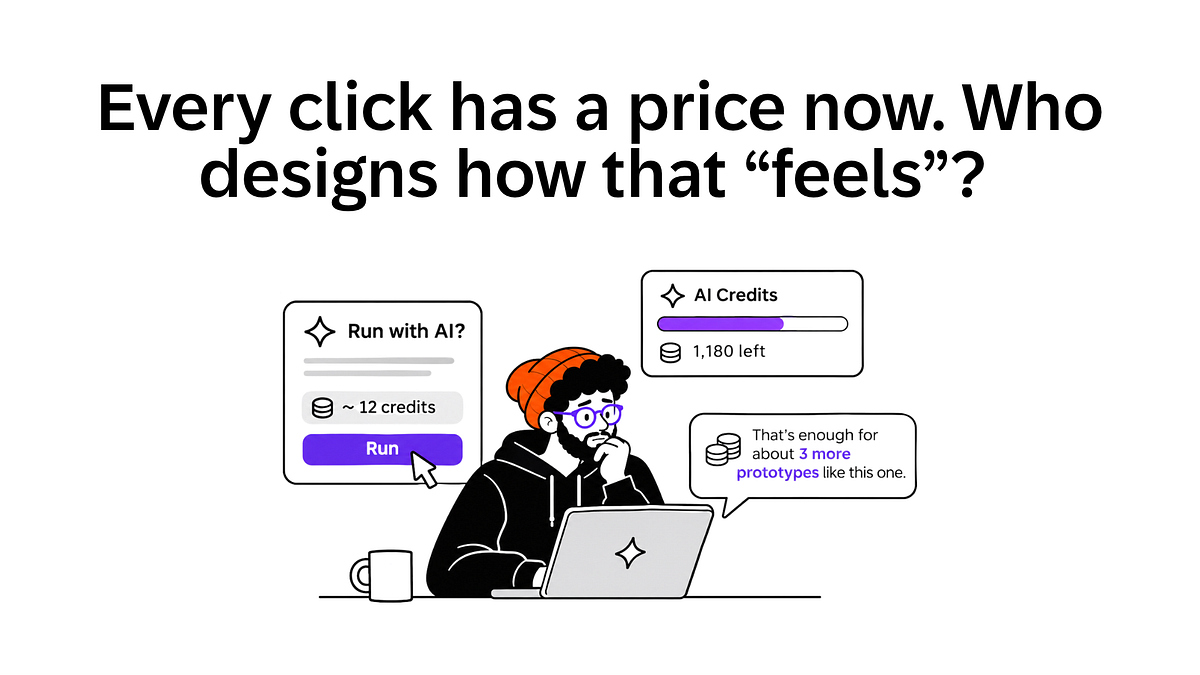
As usage-based pricing spreads, the emotional experience of spending becomes a design surface. Someone has to own how a click that costs money feels. Right now, mostly nobody does.
The crooked plate that felt more human than the algorithm
UX CollectiveWe spent years teaching machines to be flawless, and now the flawlessness reads as absence. A short, well-argued note on why imperfection is becoming a design asset again. Good companion to the beige-era critique.
Looking Ahead
The through-line to watch next week is subtraction. Every serious piece this week pointed the same direction: the value is in what you remove, what you refuse to build, and what you protect your people from. If you’re planning Q1, the question isn’t which agent to add. It’s which decisions you’re going to make deliberately before the tools make them for you.
Quick Hits
- Below the surfaceThe archaeological research project of the North/South metro line lends the River Amstel a voice in the historical portrayal of Amsterdam...Sidebar.io
- If X, then YIt was never easy to predict the future, but at the moment it feels near impossible....Sidebar.io
- Bodega cats of New YorkPhotographs and stories of the cats who live in New York’s bodegas, and the people who know them by name....Sidebar.io
- Airline LogosFrom Lufthansa’s crane to United’s tulip, the stories behind twelve airline logos designed for the jet age....Sidebar.io
- I made a film in ExcelA testament to the inescapable pull of making something out of nothing....Sidebar.io
- State of JavaScript 2026Take the State of JavaScript survey: a programming language that grew up much, much bigger than anybody ever anticipated....Sidebar.io
- 1 in 8 billionBecome one of the babies being born right now and live their whole life inside the real statistics of 172 countries and territories....Sidebar.io
- A family tree of software job titlesIf you’ve been in this industry for any length of time you’ll have seen titles come and go, and you might have wondered where they all came…Sidebar.io
- Please use AIBe sure to use AI when making....Sidebar.io
- TKA new way to write from Medium.Sidebar.io
- Blossom carouselEnhance native scrolling with dragging instead of replacing it....Sidebar.io
- What product strategy doesOn maintaining and rebuilding critical relationships....Sidebar.io
- Customer or product?Sort the apps your family uses and see the price you can’t see....Sidebar.io
- 😸 Deep Dive: The Future of Work is Multiplayer...The Neuron AI
- 😺 Jensen Huang resigned as Nvidia CEO...The Neuron AI