
D3 Weekly — Nov 01 to Nov 08, 2026
The design and AI communities converged on a single uncomfortable truth this week: the interface is no longer the product, and the human is no longer the user. From Figma's new agent to the Pope's warning on AI, the conversation shifted from what can this do to who does this serve.
This Week’s Focus
The most interesting thread this week wasn’t a tool launch or a rebrand. It was a quiet, persistent argument about where human judgment actually lives once the machines can generate everything. Chris Butler put it plainly: AI has designers questioning their entire value proposition, but the three things we think we’re chosen for — being faster, cheaper, better — were never the real reason anyone hired us. Tobias van Schneider made the companion point from a different angle: nobody learns taste by being told. You learn it by making things, hating them, and making them again.
What ties these together is a shift in what we’re being asked to do. The craft isn’t in the pixels anymore. It’s in the constraints, the editing, the decisions about what not to ship. Noman’s piece on designing skills for the agentic era makes this concrete — skills are becoming the apps of this generation, and the same discipline that made you good at shipping software applies to shipping them. Meanwhile, the UX Collective ran a whole week of pieces circling the same anxiety: AI can generate the interface, but what makes it worth caring about is still a human call. The stop button, the taste, the judgment — those are the job now.
Design
There will always be someone faster, cheaper, and better
Sidebar.ioAI has designers questioning everything. But the three things we think we’re chosen for haven’t changed at all. A sharp, necessary read on why the panic is misplaced and what actually earns you the work.
Nobody learns good taste by being told
The Desk of Tobias van Schneider
Taste isn’t transferable through instruction. It’s built through repetition, failure, and the slow accumulation of seeing enough to know what’s wrong. Van Schneider at his most direct.
AI can generate the interface. What makes it worth caring about?
UX Collective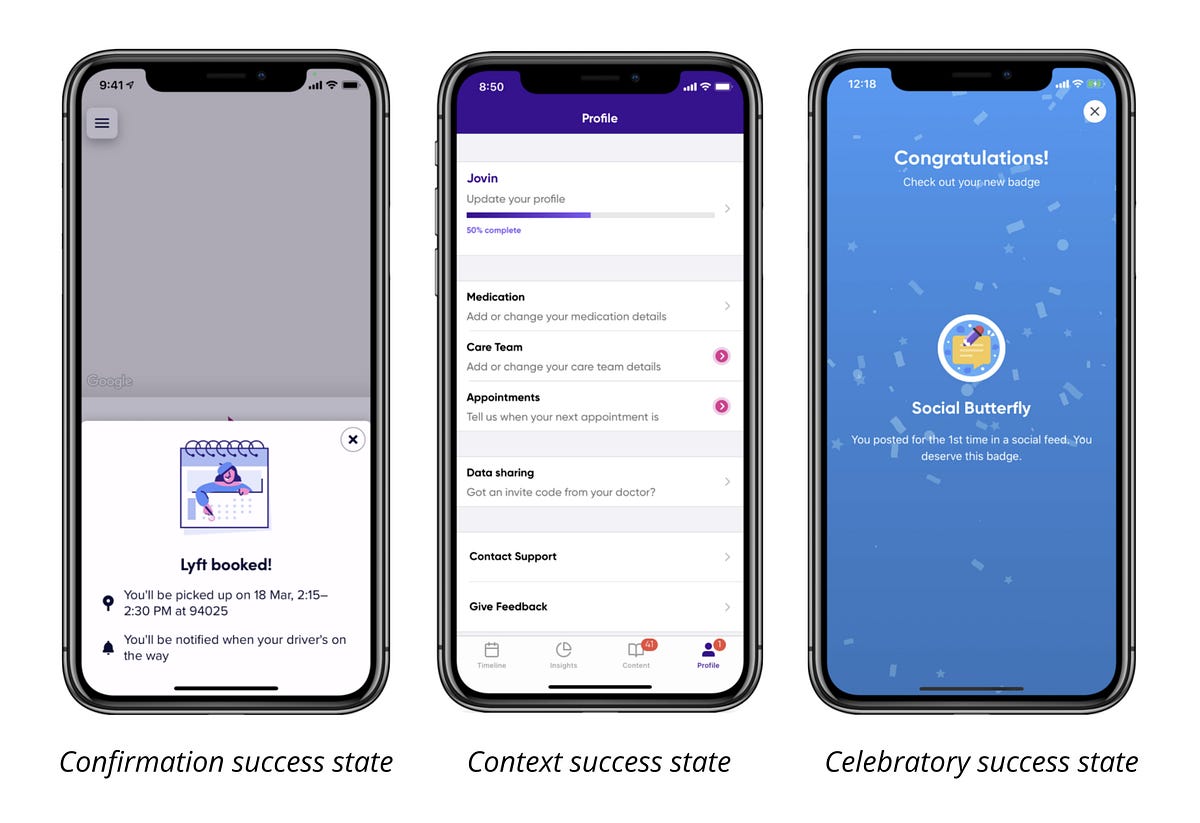
Generation is cheap now. Meaning isn’t. This piece asks the question most AI-design content skips: once anyone can produce a screen, what makes one worth a second look?
Designing a skill
Sidebar.io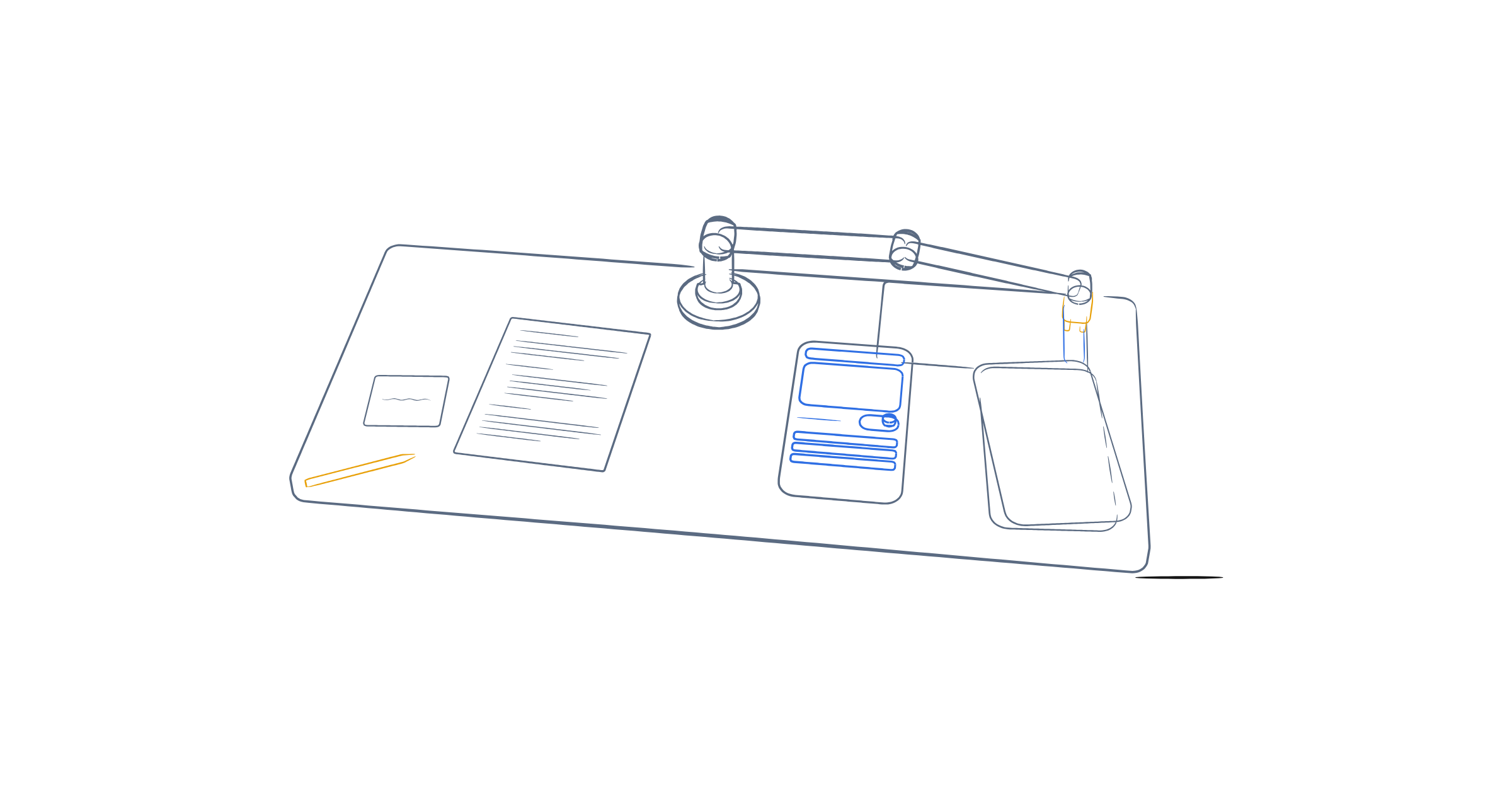
Skills are becoming the apps of the agentic era. What you learned shipping quality software still applies — scope, edge cases, the discipline of a clean interface. Worth reading before you build your first one.
Nubank: Rebrand
Sidebar.io
Koto’s rebrand for Nubank is a masterclass in building a system that stays unmistakably itself while flexing across every surface. Brand and digital foundations designed to fight complexity, not add to it.
AI and Technology
Everyone is building AI agents. Who’s designing the stop button?
UX Collective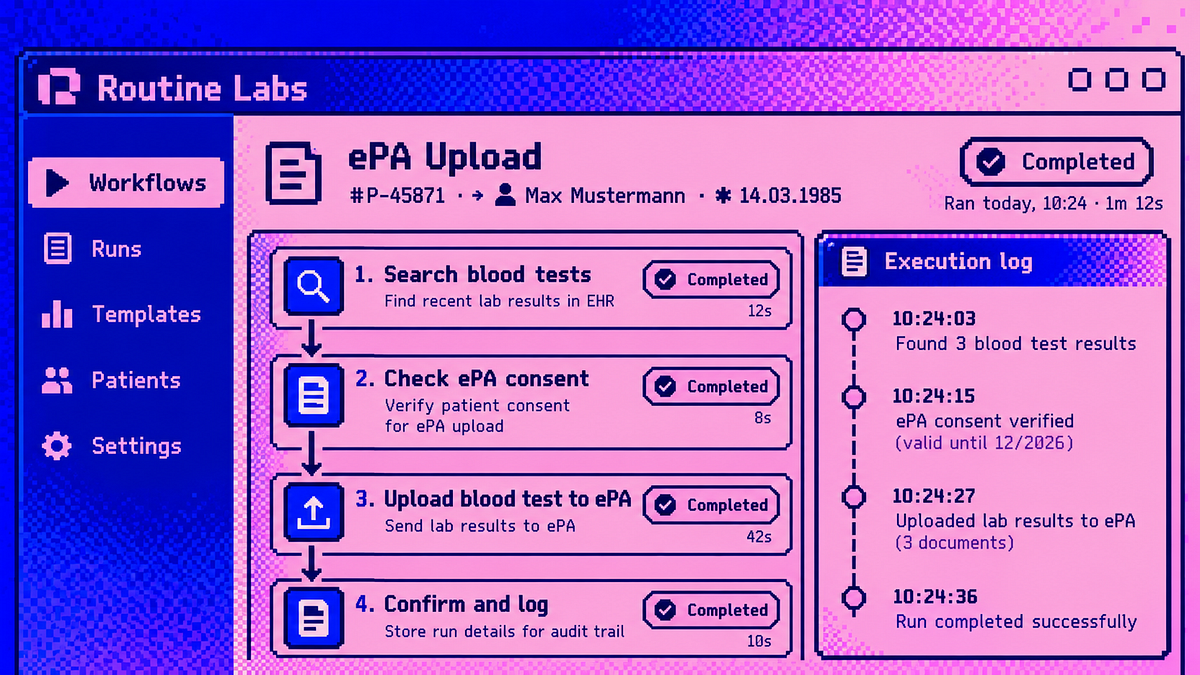
Your AI is non-deterministic, but your product can’t be. The hardest design decisions happen exactly where the agent’s autonomy ends and the human’s control begins. This is the design problem of the year.
How Figma’s PMs actually use AI every day
Lenny’s Newsletter
Figma growth PM Ezra Mechaber demos PM OS, a 31-skill repo used by 60+ PMs, and AutoXP, an agent that runs growth experiments with a single human checkpoint. Concrete, not theoretical — exactly the kind of internal tooling most teams should be studying.
Building an AI-ready design system library
Sidebar.io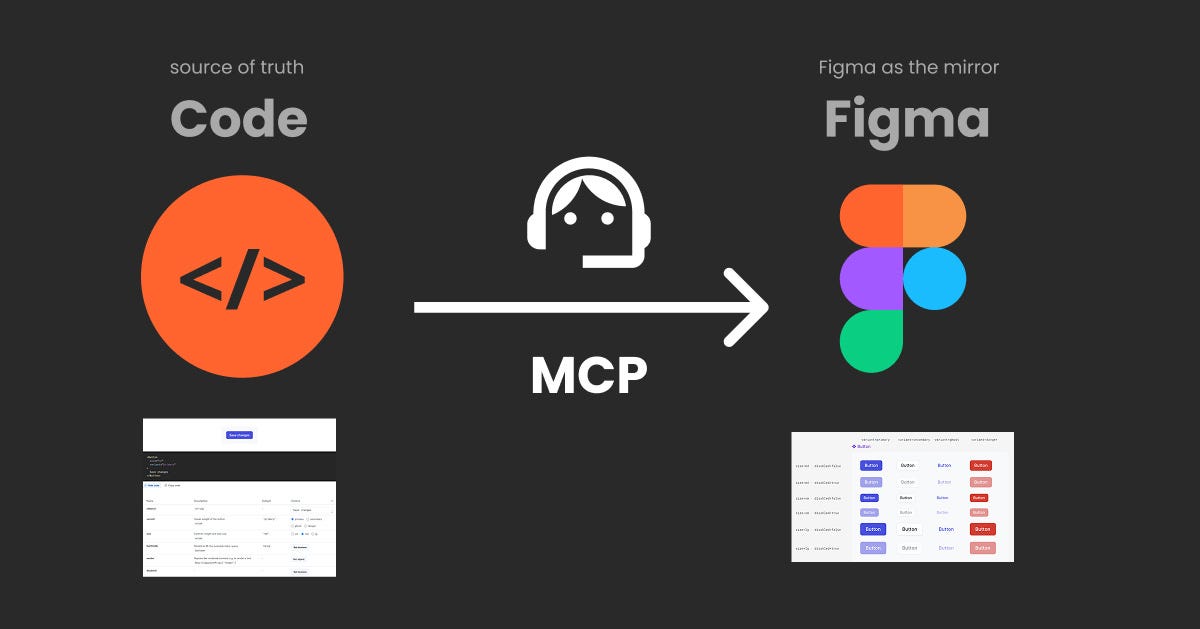
Why the design system starts in code, and how to build, check, and maintain the Figma library from there using MCP. A practical architecture for teams who want their system to be legible to both humans and agents.
What AI has changed in Design Systems, and what is still up to us
UX Collective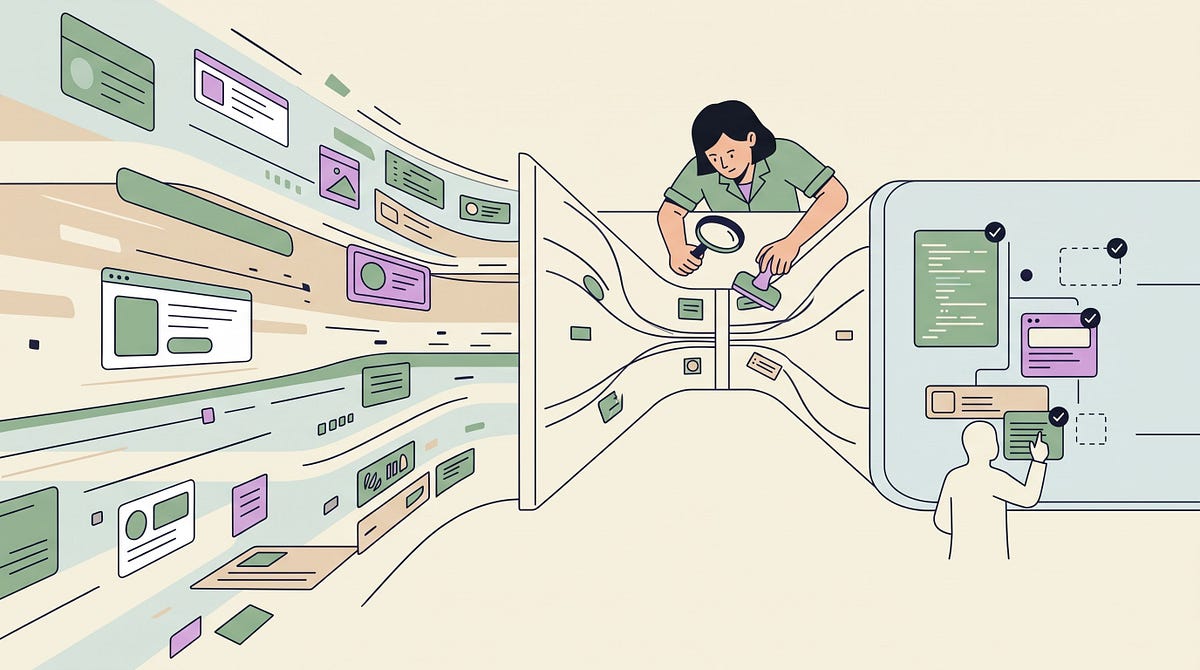
A clear-eyed split between what the machines have genuinely taken over in design systems work and what remains stubbornly human. Useful framing for anyone defending headcount or scope.
NVIDIA’s plan to stop AI agents from wasting expensive memory
The Neuron AIAgents accumulate context as they read, reason, and use tools. NVIDIA’s memory strategy shows why making them affordable requires hard decisions about what to store, where it belongs, and when to reuse it. The infrastructure story behind the agent boom.
Tools and Craft
Desigma
Sidebar.io
A free Figma alternative built on Rust. Independent, local-first, open-source. Whether or not it sticks, the fact that this exists and runs is worth paying attention to.
Jelly UI
Sidebar.ioA dependency-free Web Components library for tactile interfaces: soft-body physics, real form controls, dark mode, RTL, and WCAG. The kind of playful-but-accessible foundation that’s rare to see done well.
Mean
Sidebar.io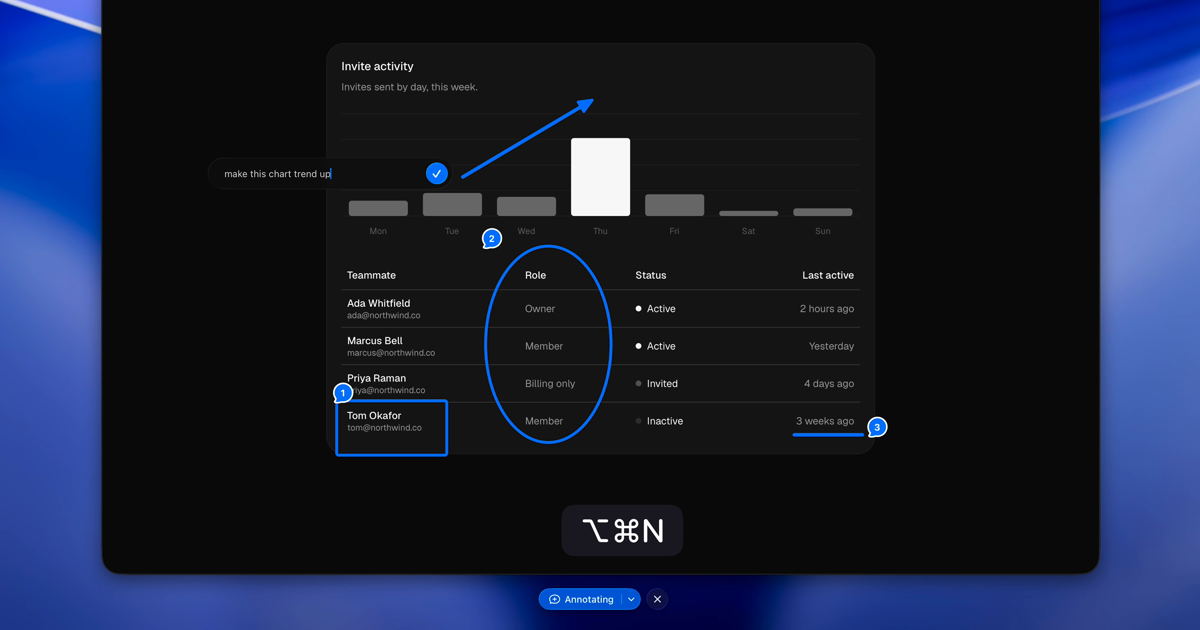
Visual handoff for humans and agents. Freeze or record your screen, annotate with gestures, and hand the finished session to a person or an AI. A small tool that quietly answers a big question: how do we point at things when the collaborator isn’t human?
The window with no buttons
Sidebar.io
Why the terminal feels so alien to designers, and how to read it anyway. A generous, non-condescending bridge for the designers who’ve been told to learn the command line and quietly avoided it.
Tokenizer Mono
Sidebar.io
A monospace font that highlights LLM tokens as you type. No JavaScript — just OpenType substitution rules and a color table. Clever, and a nice reminder that the browser can still do surprising things.
Looking Ahead
The through-line for next week is control. Every tool shipping right now — agents, design systems, handoff apps — is really an argument about where the human sits in the loop. The teams that win the next quarter won’t be the ones with the most agents running. They’ll be the ones who designed the clearest, most legible boundaries around what those agents are allowed to decide. Watch for more stop-button thinking, more skill-based tooling, and a slow migration of design systems from Figma-first to code-first. The craft didn’t disappear. It moved.
Quick Hits
- A sans serif built on oversized round shapesSuperior Type’s Heaven is a brutalist grotesque built on round shapes that are too big for their space....Sidebar.io
- Attention is all you needA report from the future on AI, attention, and the maintenance of civilization...Sidebar.io
- A-FrameA web framework for building virtual reality experiences.Sidebar.io
- Great but painfulIf you want to build a product that people will use, find something that people already do and make it less painful....Sidebar.io
- Digital minimalismBeing intentional about ways that you access digital technology, making each use a conscious choice....Sidebar.io
- Pick threeExploring the hidden cost of producing good, fast and cheap creative work....Sidebar.io
- Avant GardeA seminal, but somewhat overlooked by a wider public, magazine, which broke taboos, rattled some nerves and made a few enemies....Sidebar.io
- Paper MonoA beautiful monospace font family with 8 variable weights and coding ligatures, free and open source....Sidebar.io
- Fingerprints are the new cookiesHow browser fingerprinting replaces third-party cookies for persistent user tracking.Sidebar.io
- How to hire junior engineers in the age of AIJunior developer hiring has collapsed because nobody knows how to interview for the new AI-assisted job....Sidebar.io
- 😺 OpenAI released GPT-6 Cyber, a hacking AI...The Neuron AI
- Trump's New Super Intelligence Task Force Has Two Very Different JobsThe DOJ's new Super Intelligence Task Force will coordinate AI-related prosecutions while also challenging certain state AI laws.The Neuron AI
- Claude Can Now Read Your Bank Accounts. How Private Is Your Financial Data?Claude can now analyze your bank transactions through Plaid.The Neuron AI
- Everything That Happened in AI Today (Friday, November 6, 2026)Independent researchers say Anthropic's AI development is accelerating at roughly twice its previous pace, but key evidence remains…The Neuron AI
- OpenAI's GPT-6 Cyber Can Hack Better. Can It Stay Within the Rules?OpenAI's GPT-6 Cyber can develop working exploits and shows major improvements in following authorized testing boundaries.The Neuron AI