
D3 Weekly — Oct 25 to Nov 01, 2026
The design and AI communities converged on a single uncomfortable truth this week: the interface is no longer the product, and the human is no longer the user. From Figma's new agent to the Pope's warning on AI, the conversation shifted from what can this do to who does this serve.
This Week’s Focus
The most interesting thread this week wasn’t a tool launch or a model release. It was a quiet, widespread admission that the AI features we’ve been shipping for two years are mostly noise. Sidebar surfaced “Nobody asked for the sparkle button,” and it landed because everyone recognized it: the same AI panel bolted onto every product, users hunting for the off switch, spend outrunning returns. The critique isn’t anti-AI. It’s anti-lazy.
What follows from that admission is the harder question, and it showed up everywhere. If code is cheap, what’s still expensive? Atif Azam’s answer: deciding what to build and how it should feel. Karl Koch’s answer: giving people an undo button they can actually trust. The UX Collective’s answer: context is the new interface. Different words, same conclusion. The craft moved upstream, from making the thing to deciding what the thing should be and how a person recovers when the machine gets it wrong. That’s the work now. Everything else is a sparkle button.
Design
The software factory forgot about design
Sidebar.io
Code is cheap now. What’s still expensive is deciding what to build and how it should feel. The factory optimized the part that got easy and ignored the part that never will. Read this one twice.
Nobody asked for the sparkle button
Sidebar.io
Products ship the same AI panel, people hunt for the off switch, and spend has outrun returns. The argument is simple and correct: build features with AI, not AI features. The distinction is the whole job.
On giving people an undo button in AI products
Sidebar.io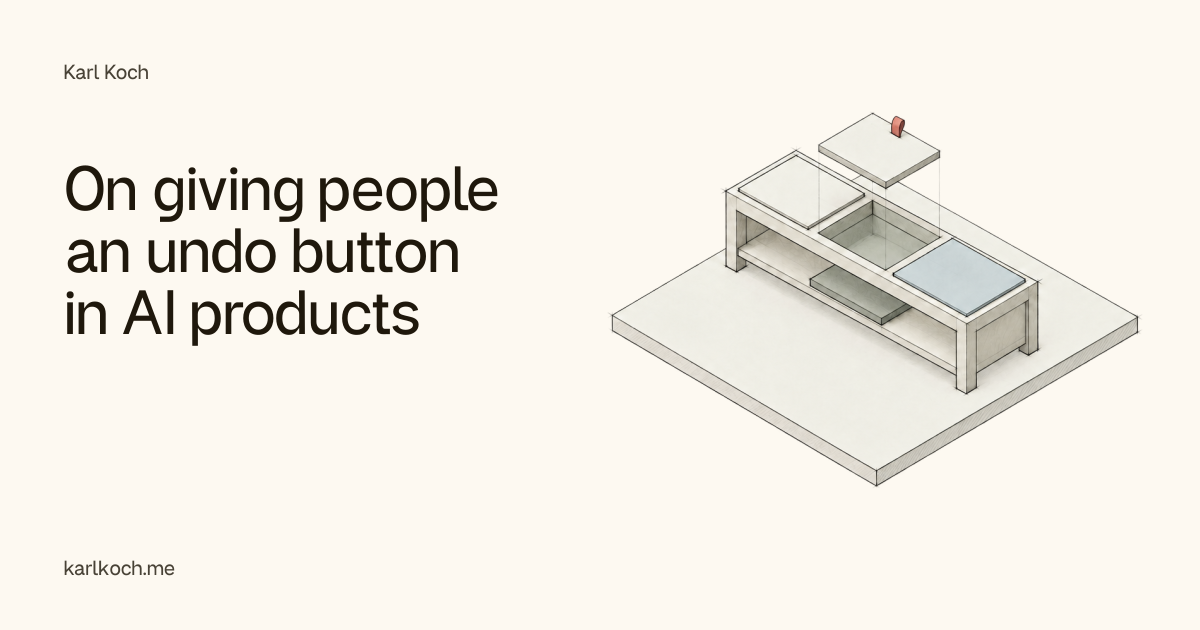
Designing AI edits people can inspect, accept, and recover from without losing the work they wanted to keep. Trust is built in the recovery path, not the generation. Most teams still skip this.
Design systems should be fast by default
Sidebar.io
If a design system’s components are slow to interact with, so is every app built on it. Performance is a design system feature, and treating it as an afterthought compounds across every product you ship.
Your design system was never about components
UX Collective
Google, Atlassian, and Figma now ship a file for the reasons behind a design. Nothing makes the machine follow it. The rationale is the artifact that matters, and we still haven’t figured out how to enforce it.
AI and Technology
Why Reddit built its own AI prototyping tool
Lenny’s Newsletter
Reddit’s principal UX engineer shows how a custom Figma MCP and Cursor pipeline takes a designer from blank slate to shareable, production-shaped prototype in minutes, no Git required. This is the most concrete answer I’ve seen to what AI prototyping actually looks like inside a real org.
Grok vs. Dot vs. Muse vs. Claude Duet: which one crushes the competition?
Lenny’s Newsletter
Four agents ranked across nine real tasks, with the scores deciding which one runs the work and which one runs the life. Useful because it’s tested against actual jobs instead of benchmarks.
OpenAI Wants ChatGPT to Understand What You Mean, Not Just What You Say
The Neuron AIOpenAI’s updated Model Spec explains how remembered preferences should inform responses and when an agent needs permission. The company admits its models don’t fully meet those expectations yet. The permission model is the part designers should be reading closely.
Could Your Next Manager Be AI? OpenAI Researchers Think It’s Possible
The Neuron AIOpenAI researchers envision AI supervising employees and advising executives. The effect on workers depends on who controls evaluations and how employees can challenge mistakes. The org design question is bigger than the model.
Google’s Gemini 4 Carbon Can Find and Exploit Software Flaws. Who Gets Access?
The Neuron AIGemini 4 Carbon can find software flaws and test their exploitability, but Google is limiting early access to selected defenders. The rollout tests whether a head start leads to faster repairs, while independent evaluations show mixed results. Worth watching for anyone shipping software at scale.
UX and Craft
Context is the new interface
UX Collective
The interface is becoming the context you bring, not the screen you tap. A useful reframe for anyone still designing for a blank prompt.
Beyond chatbots: UX for deep AI research
UX Collective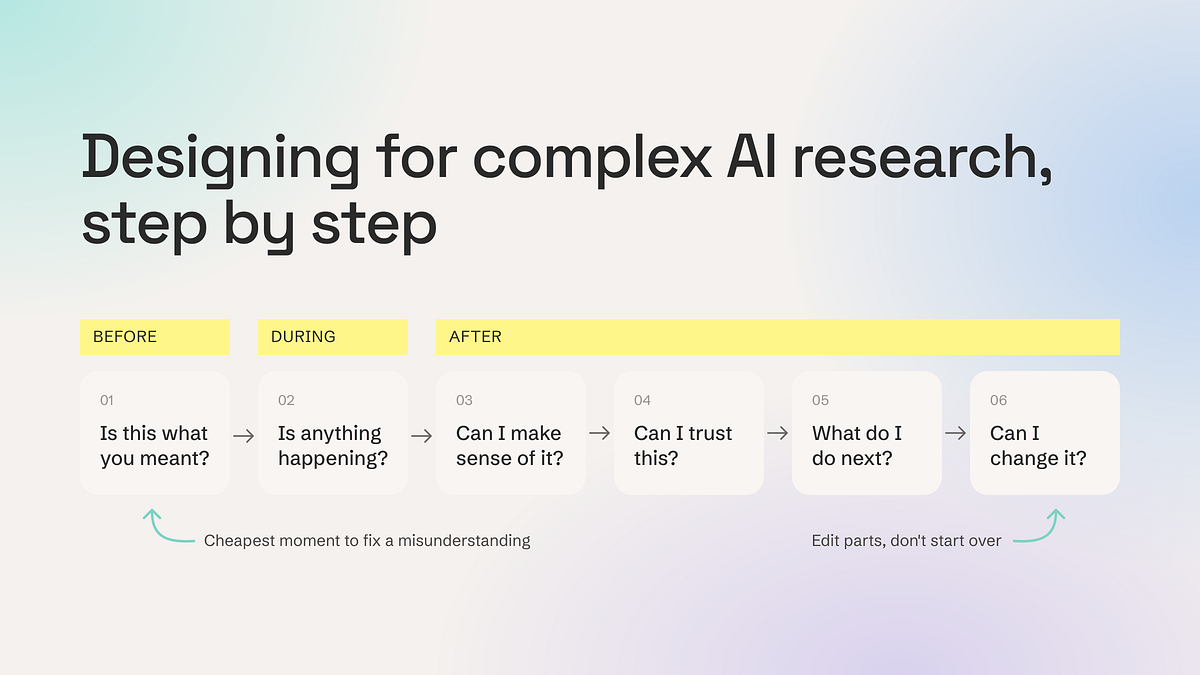
What Gemini, Perplexity, Copilot, and Consensus do when an answer takes time. The waiting state is where most AI products fall apart, and this breaks down who handles it well.
When colors pass but palettes fail
UX Collective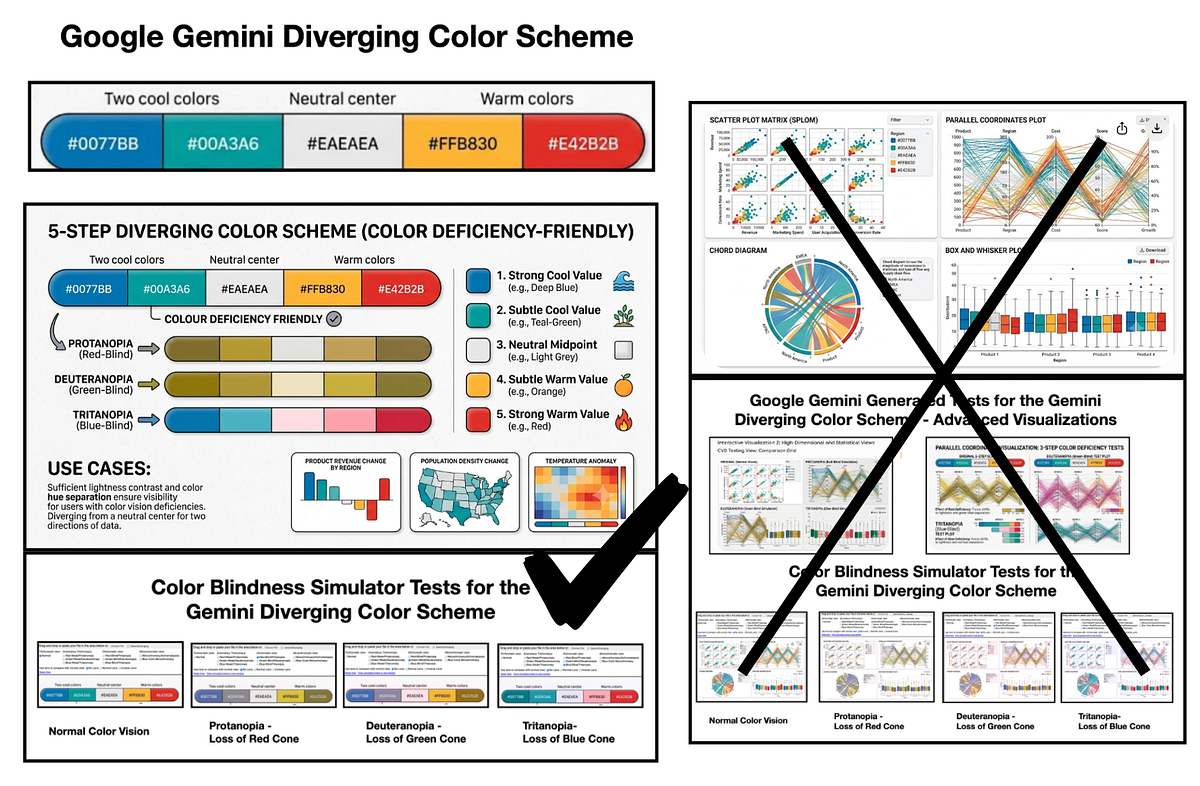
The accessibility challenge of generative AI diverging color palettes. Individual colors can pass contrast checks while the palette as a whole falls apart. A sharp catch for anyone generating color at scale.
How to design transparent AI cost controls
UX Collective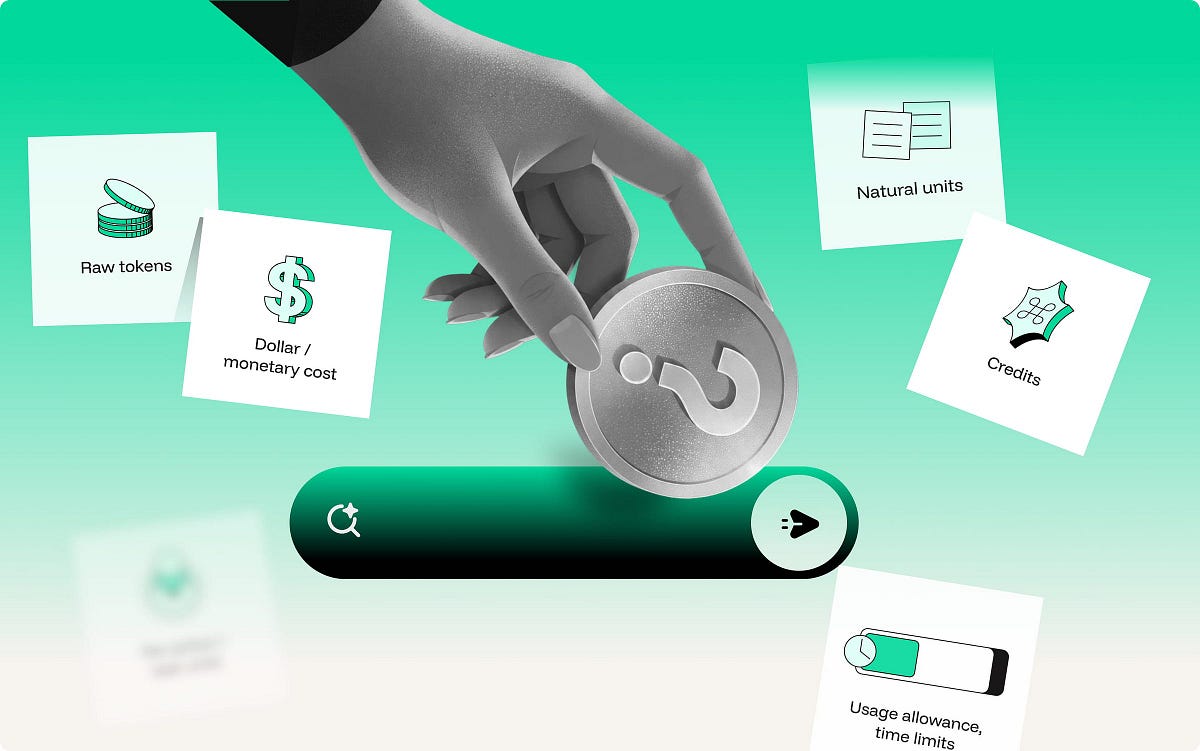
Spend outrunning returns is the theme of the quarter. This is the practical counterpart: how to show people what AI costs them without hiding the meter. Directly relevant to anyone shipping usage-based AI.
Looking Ahead
The sparkle button is on its way out. What replaces it is the real story of the next quarter: products that earn trust through recovery, transparency, and context instead of a magic wand. Watch for the teams that treat the undo button and the cost meter as first-class design problems. They’ll be the ones still standing when the novelty wears off.
Quick Hits
- Struggle togetherI learned programming and design by trying, failing, and trying again.Sidebar.io
- The New York Times turns 175A custom 175 mark and identity system to use across editorial, opinion, advertising, events and marketing....Sidebar.io
- Website migration costs are going to zeroWhat happens when AI makes website migrations almost free?...Sidebar.io
- HairlineThirty-three isometric line figures that answer the pointer.Sidebar.io
- Text-to-cadDesign physical products with AI.Sidebar.io
- Microsoft’s identity for Copilot positions it as a tool for workRedefining Copilot via dynamic motion geometry, translating software logic into enterprise productivity....Sidebar.io
- Shipping the roadmap is the minimumPeople look at the roadmap and their commitments, and success is about how much of those they actually shipped....Sidebar.io
- Air ThereminTilt your phone, or wave both hands at the camera: spread them for volume, raise them for pitch....Sidebar.io
- Glashütte Trash ClockA fully functioning clockwork made from trash and other stuff that I found in Glashütte, Saxony....Sidebar.io
- Design as a gardenA different way to think about creative work....Sidebar.io
- Russian and East European postersPoster art as used in advertising for performances and films in a variety of Party-sponsored campaigns and ephemera....Sidebar.io
- Knowing how is not knowing whatWhat RL environments need to supply: organizational context, domain rules and connected information....Sidebar.io
- How sad is this chapter?Find out how emotionally devastating a chapter is before you read it....Sidebar.io
- Code review was never about the codeCode review was always meant as a verification step: does the code produce the outcome we want?...Sidebar.io
- André Britz’s landscapes, bound with a pink elastic bandIntuitive drawings of places made from memory alone, in a 64-page book designed to feel unfinished....Sidebar.io