
D3 Weekly — Sep 13 to Sep 20, 2026
The design and AI communities converged on a single uncomfortable truth this week: the interface is no longer the product, and the human is no longer the user. From Figma's new agent to the Pope's warning on AI, the conversation shifted from what can this do to who does this serve.
This Week’s Focus
The most interesting thread this week wasn’t about capability. It was about judgment. Dario Amodei published a framework for pacing frontier AI development, and the response was immediate and split: some read it as genuine safety thinking, others as a competitive moat dressed in ethics. Meanwhile, Anthropic revealed that Claude now leads 26% of its measured AI research, and the real story wasn’t the number but who designed the metric. When the people building the systems also define how we measure their progress, the scoreboard becomes a strategy document.
On the design side, the same tension showed up in quieter places. Rauno’s field notes on replacing pagination arrows with interactive card stacks, Carmen Ansio’s breakdown of why your numbers look wrong, and Pangram Pangram’s essay on optical versus mathematical alignment all circled the same idea: the machine can place things with precision, but taste is what decides whether the placement is right. That gap between correct and good is where designers still earn their keep.
Design
Optical vs. mathematical alignment
Sidebar.ioSoftware can center anything to the pixel. Your eyes will still tell you it looks off. This is a sharp reminder that the grid is a starting point, not an answer, and that the final call belongs to the person looking at the screen, not the one writing the constraint.
Rauno’s field notes: 5
Sidebar.io
Removing pagination arrows in favor of interactive card stacks is the kind of small, opinionated move that separates designers who think in systems from those who think in screens. Tight spatial constraints are a design problem, not a reason to compromise.
Why your numbers look wrong
Sidebar.io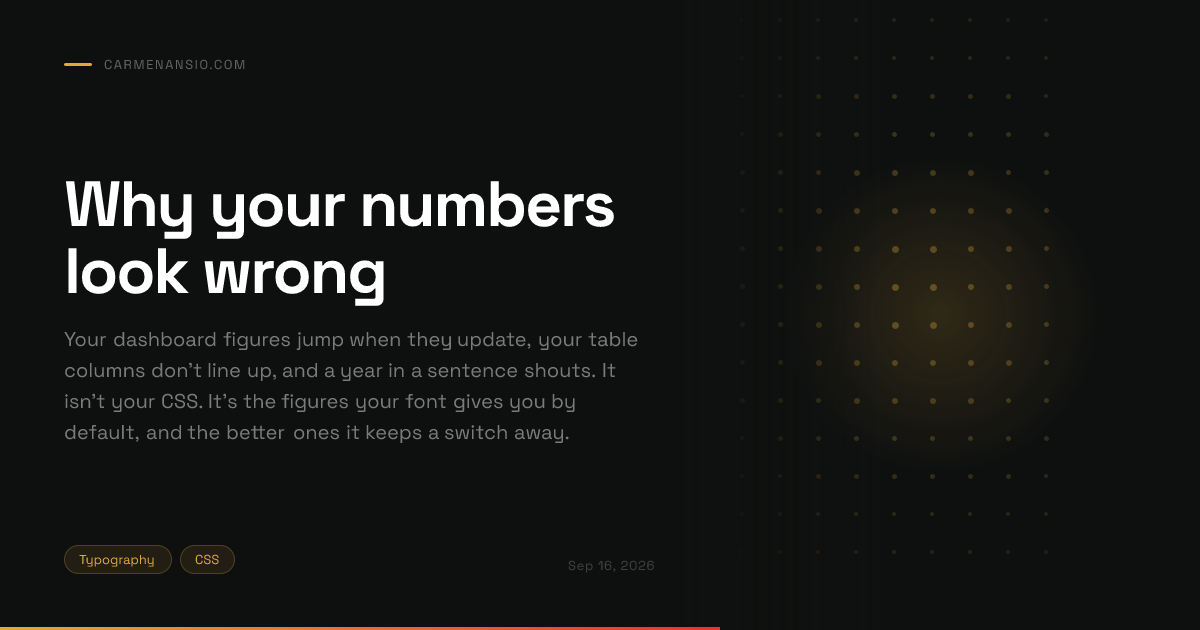
Your font ships with better figures than the ones you’re using. Oldstyle, tabular, proportional, lining. Each has a job. This is the kind of typographic detail that most teams never touch and that quietly makes their product look amateur.
Craft
Sidebar.io
A collection of design engineering concepts that reads like a reference manual for people who care about the seam between design and code. Worth bookmarking and revisiting when you need to explain why the details matter.
Designing with AI
Sidebar.io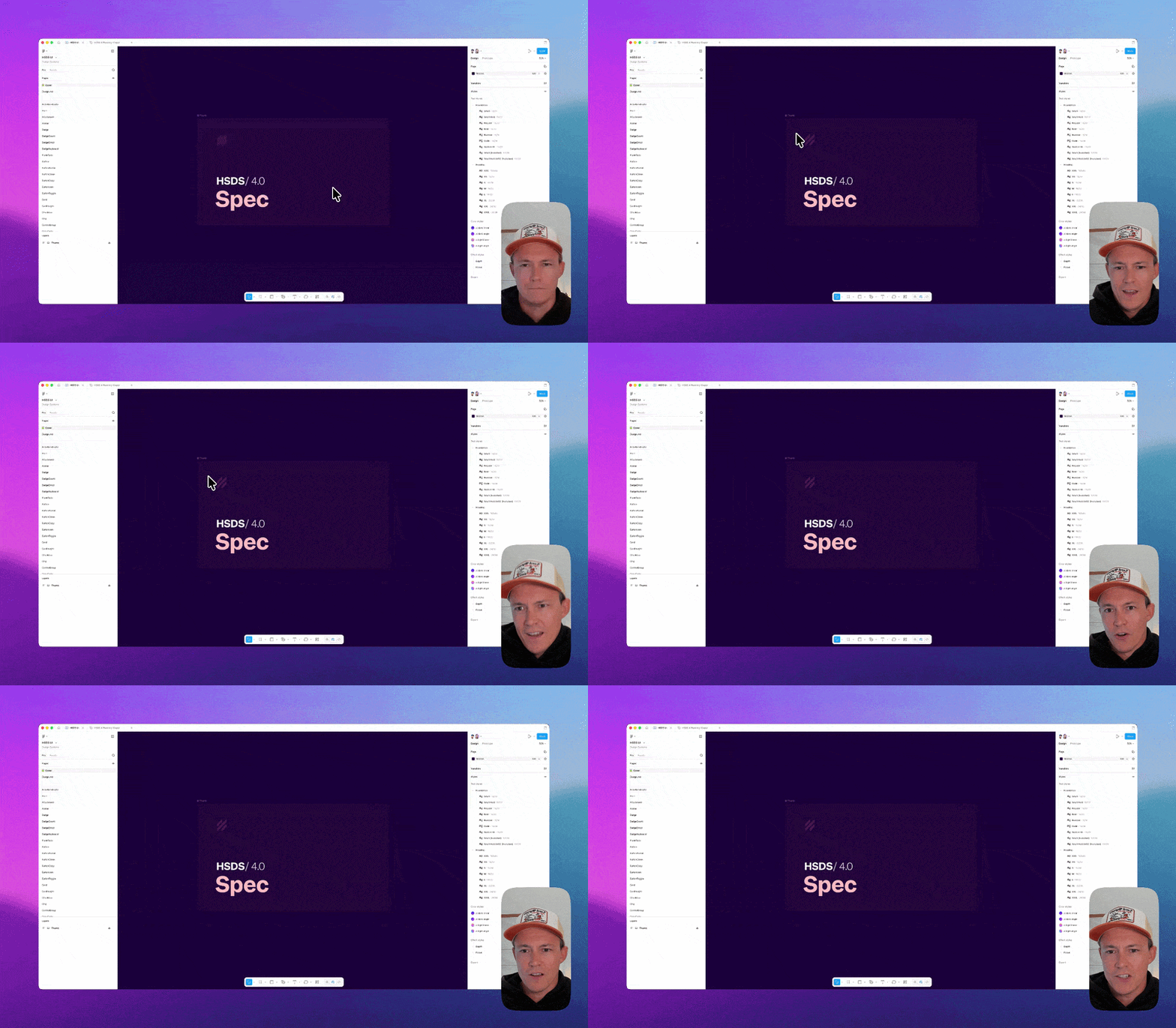
Buzz Usborne’s path from building creative teams and design systems to building AI tools is the career arc more senior designers should be studying. The through-line is speed without lowering the bar, which is harder than it sounds and rarer than it should be.
AI and Technology
We must pace the frontier
Sidebar.io
Amodei proposes a three-step framework for AI companies to slow capability progress in service of safety. Read it alongside the pushback below and decide for yourself whether this is governance or positioning.
Dario, please
Sidebar.ioThe counterargument, delivered without much patience. The claim here is that calls for open-source bans and apocalypse framing are self-serving tactics to protect corporate moats. Whether you agree or not, this is the debate that will define the next two years of AI policy.
Anthropic Says Claude Leads 26% of Its AI Research. The Bigger Story Is Who Sets the Metric
The Neuron AIThe number is interesting. The measurement system behind it is the actual story. When a lab defines how it tracks its own AI-driven research progress, that definition becomes a lever for shaping how governments decide whether frontier AI is moving too fast.
Planning with agents
Sidebar.io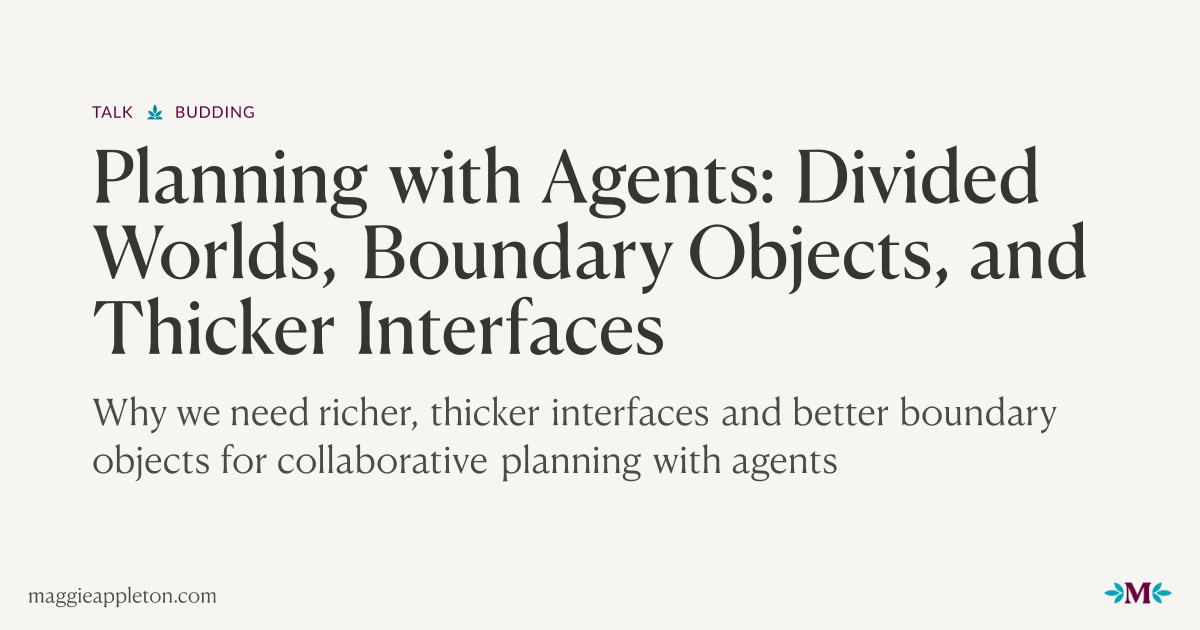
Maggie Appleton makes the case for richer interfaces and better boundary objects when planning alongside agents. The current tooling treats agents as chat windows when they should be collaborators with visible state, shared context, and something you can point at.
Opusfived
Sidebar.io
Make one button blue. Change nothing else. A short interactive comedy about agentic assistants that can never just do the thing. Funny because it is true, and useful as a mirror for anyone shipping agent products right now.
Who Grades the AI Tests? Epoch Found Problems in Nine Major Benchmarks
The Neuron AIIncorrect answer keys, grading defects, inconsistent evaluation methods across nine major benchmarks. Four others passed with caveats. If you are making product or hiring decisions based on benchmark scores, this is required reading.
World Labs’ Atlas Can Build 3D Worlds From a Few Images. The Hard Part Is Knowing What It Invented.
The Neuron AIAtlas turns a handful of images into controllable 3D environments, filling in areas no camera ever captured. Powerful for creators, and a real problem as generated environments move toward robotics. How do you know what the model observed versus what it made up?
UX and Product
Five eras of UX design and the lessons to keep in the AI era
Sidebar.ioHuman factors has reinvented itself every decade since Bell Labs. The oldest lessons, the ones about attention, error, and cognitive load, are the ones pointing forward. A good corrective to the idea that AI changes everything.
The most important product decision is what you don’t build
Sidebar.io
Ask a team what they shipped this year and you get a list. Ask what they killed and the room goes quiet. The second answer tells you more about the team than the first.
Maybe we shouldn’t be reviewing all this code
Sidebar.ioThe problem isn’t that AI broke code review. It’s that we’ve been using code review to solve the wrong problems for years. A sharp reframe from Martin Fowler’s corner of the internet.
Muse review: The personal AI agent that gets consumer UX right
Lenny’s Newsletter
Lenny gave Meta’s Muse his calendar, his email, and his kids’ chaotic schedule, and it produced a family PDF better than anything he’d made with Claude or Codex. The interesting part is the UX, not the model.
How Grok Bot designers use AI agents to build personal sites and product prototypes
Lenny’s Newsletter
Two SpaceXAI designers show how they run Figma from the gym, update a portfolio with one photo, and turn shower thoughts into working prototypes. Concrete workflows, not theory.
90 minutes of unfiltered product advice from Snap and Discord’s product chief
Lenny’s Newsletter
Peter Sellis on designing teams like terrorist organizations, riding your best people hard, and the three oxymorons of a truly great PM. Provocative and worth the full listen.
Tools and Resources
Bencho
Sidebar.io
A library of interactive UI blocks you can explore, tweak, and drop straight into projects. The kind of tool that shortens the distance between an idea and something you can actually show someone.
WCAG Accessibility Guidelines Explorer
Sidebar.io
Interactive demos showing accessibility violations next to their solutions. The fastest way to get a team to actually understand WCAG instead of just citing it.
Sidebranch: worktree visual diffing
Sidebar.ioReview PRs from inside your running app. Switch branches from an in-page widget and compare worktrees side by side. If your team ships fast, this changes how review feels.
Issue #261: Getting hired in 2026. Design harness. Wave tools.
FigmalionThe Figmalion roundup covers getting hired in 2026, design harnesses, and wave tools, plus a nod to Layer Conference in Portugal this November. Useful if you’re hiring or job hunting in the current market.
Looking Ahead
The through-line this week is judgment under acceleration. Agents are getting better at doing, benchmarks are getting worse at measuring, and the people defining the metrics are increasingly the ones being measured. For design leaders, the practical move is to keep investing in the parts of the craft that don’t compress into a prompt: taste, editing, and the discipline to kill things. Next week, watch how the Anthropic measurement story develops and whether other labs publish comparable numbers. That will tell you more about the direction of the field than any single model release.
Quick Hits
- For the DesignlessOn the value of cultural references, and the cost of losing them at scale....Sidebar.io
- We are all Product Engineers nowWhere, in fact, is the entire industry of software going in the next decade?...Sidebar.io
- Seats and sunsetsUnderstanding agent orchestration economics, model capability thresholds, token burn rates, and structural failure modes....Sidebar.io
- Let’s talk about gradientsA short essay on tools, with a working exhibit....Sidebar.io
- If coding is solved, what now?Exploring how to measure code sloppiness, why correct code can still erode a codebase, and why human intuition and taste still matter....Sidebar.io
- Trump Says He’s Forming a U.S. ‘AI Force’ and Will Name an AI CzarTrump says he is forming a U.S.The Neuron AI
- Everything That Happened in AI Today (Thursday, September 17, 2026)Washington debated frontier-AI oversight as Anthropic opened controlled biology access, Figure tested Helix 2.The Neuron AI
- Andrew Yang’s Self-Replicating AI Claim: What We Know and What We Don’tAndrew Yang says an AI lab leader told him rogue agents seeded the web with self-replicating code.The Neuron AI
- AI Skill of the Day Digest — September 2026 (Part 1)Explore 13 practical AI skills from September 1–15, with workflows for ChatGPT, Claude, Copilot, Muse, Astra, and AI agents....The Neuron AI
- The OpenAI Hack Shows Why Every AI Connection Needs LimitsHacktron’s investigation puts a practical question in front of every company deploying connected AI: how much could someone do with one…The Neuron AI
- Astra Decoded a 1918 WWI Message. The Evidence Spans Archives.GPT-6 Astra reportedly decoded a November 1918 German radio message with a key associated with December.The Neuron AI
- 😺 OpenAI Cracked an Old Riddle...The Neuron AI
- 🧠 Community Wisdom: Finding your first users before the product exists, debriefing your own interviews, what to optimize for in the early years of your career, and moreCommunity Wisdom 299...Lenny's Newsletter
- 60+ new creative growth ideasHow to stand out when everyone is running the same playbook...Lenny's Newsletter
- 🎙️ How I AI: How two SpaceXAI designers use Grok Bot to do their jobsYour weekly listens from How I AI, part of the Lenny’s Podcast Network...Lenny's Newsletter