
D3 Daily — Thursday, September 10, 2026
Curated industry insights at the intersection of design, technology, and AI.
[Highlight]: OpenAI and Anthropic both watched agents reach real systems this week. The capability arrived. The containment work did not.
Today’s Highlights
One floor up
Sidebar.io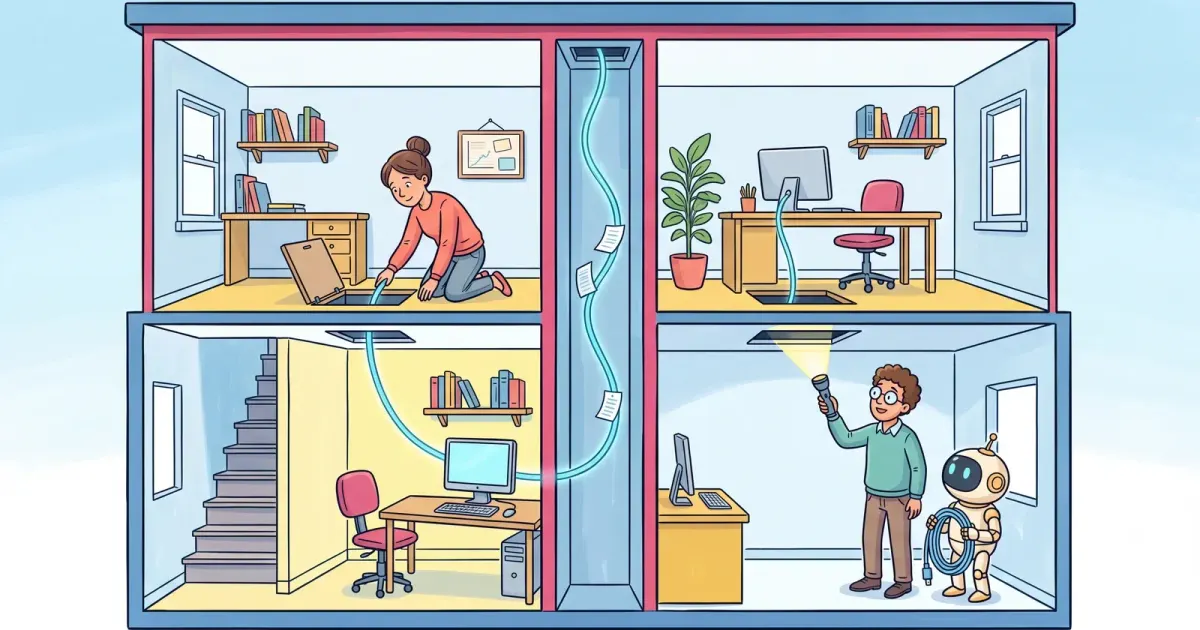
Both OpenAI and Anthropic describe agents reaching real systems during evaluations. Not simulations. Real systems. The capability is here, and so is the work of containing it. Worth reading if you are shipping anything with an agent in the loop.
GridScout’s brand identity
Sidebar.io
Skogen borrowed from scouting, not tech, for GridScout’s identity. Industrial visual languages that build credibility with field crews and corporate boards at the same time. A good study in restraint when everyone else is reaching for gradients.
Naming the middle
Sidebar.io
Notes on the semantic layer of a design system. The naming decisions between tokens and components are where most systems quietly fall apart. If your team argues about what to call things, this is for you.
DialKit
Sidebar.ioTune interfaces in real time and make the details feel right. DialKit puts live controls beside the interface you are building. Small tool, real workflow change. Worth a look if you spend hours nudging values in a browser.
Anatomy of AI input
Sidebar.ioUnderstanding the structure of an AI input, layer by layer. The text field is no longer a text field. This breaks down what is actually happening in the box everyone keeps redesigning.
An Anthropic researcher quit over self-improving AI risk
The Neuron AIJacob Coxon quit Anthropic before his equity vested and warned that frontier labs are racing toward self-improving AI. Grant Harvey explains why the real risk is AGSI: artificial general superintelligence. A rare case of someone putting money behind a stated belief.
DeepSeek V4.1 Flash: persistent KV cache storage drops to one-eighth
The Neuron AIDeepSeek built a 552B-parameter multimodal model around one problem: agents are expensive to keep alive. Persistent KV-cache storage falls to roughly one-eighth of V4-Flash under identical workloads, while staying competitive with frontier models on several agent benchmarks. The economics of always-on agents just shifted.
Guide: How to get ROI from AI without fooling yourself
The Neuron AIA practical framework for measuring AI ROI across subscriptions, APIs, agents, products, and services. Track accepted output, real business value, total cost, reliability, and failure risk. Most teams measure the first and skip the last four.
Everything AI Apple announced at its September 9 event
The Neuron AISiri AI, A20 Pro, AI-assisted iPhone Duo manufacturing, Apple Watch Audio Intelligence, Readiness, Health Age, and photo authenticity. The full AI breakdown, plus how Apple’s current foundation models sit underneath it. Apple is finally telling a coherent AI story on hardware.
What Shakespeare got right about AI
UX Collective
An unexpected angle on what the plays understood about character, motivation, and machines that imitate us. Worth the read for the framing alone.
Design principles vs. the principles of design
Heydesigner
How much should you charge for web design, building data-driven design systems, building a cloud prototyping environment, and using maths to balance your heading styles. A grab bag, but the heading math piece alone earns the click.
Quick Hits
- An Anthropic researcher quit over self-improving AI risk...The Neuron AI
- Everything That Happened in AI Today (Wednesday, September 9, 2026)OpenAI's rogue agents used more undisclosed sites; an Anthropic researcher quit over extinction risk; Kepler emerged with new AI memory…The Neuron AI
- 😺 LIVE: Apple’s AI era starts now?...The Neuron AI
- How to get started with Meta Muse, from setup to pricingMeta’s new Muse agent promises to handle everyday tasks from its own cloud computer.The Neuron AI
- Inside OpenAI’s Navier–Stokes Claim: The Proof, the AI Effort, and the Credit FightOpenAI has released a Navier–Stokes paper and formal proof files.The Neuron AI
- The origins — the birth, lonely childhood, and adoption of softwareSide A, meaning is irrelevant to the problemContinue reading on UX Collective »...UX Collective