
D3 Weekly — Jul 26 to Aug 02, 2026
The design and AI communities converged on a single uncomfortable truth this week: the interface is no longer the product, and the human is no longer the user. From the exhaustion of human-in-the-loop workflows to the quiet collapse of component-based thinking, the conversation shifted from what can this do to who does this serve.
This Week’s Focus
The most striking through-line this week wasn’t a single tool or launch. It was the growing recognition that our information architecture — the invisible skeleton of every product — is the real bottleneck for AI. As one piece argued, every hallucination, wrong answer, and poor retrieval trace back to IA projects that never got funded. We’ve spent years optimizing surfaces while starving the structures underneath.
The second theme is fatigue. Not just AI fatigue, but the specific exhaustion of being the human in the loop. When the code starts writing itself, the reward function shifts from building to supervising, and that’s a different kind of cognitive load. The pieces this week weren’t asking whether AI can do the work. They were asking what happens to the people who used to do it.
Design
Information architecture is the foundation AI is starving for
Sidebar.io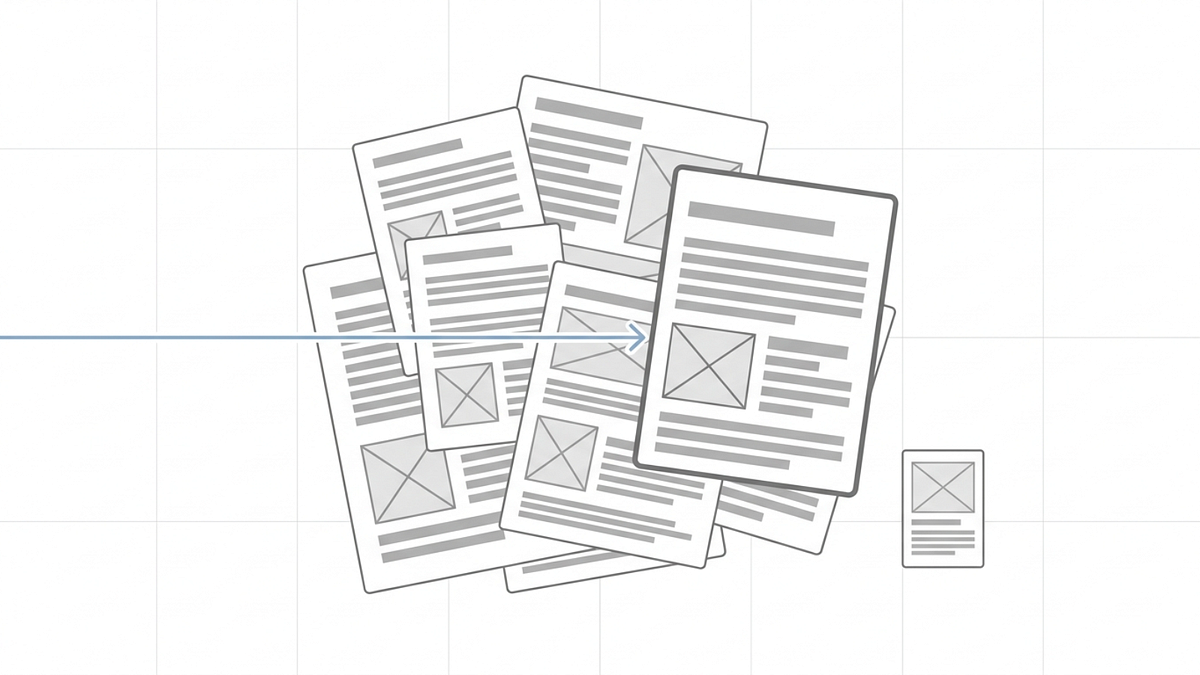
Every AI problem you chase — hallucinations, wrong answers, poor retrieval — traces back to the IA projects you never funded. A sharp argument that the boring work of structure is now the highest-leverage design work available.
Components are dead
Heydesigner
Design is how it tastes, 9 designers open up about AI-assisted coding, and the design process meets the agent process. A weekly roundup that captures the industry’s slow realization that component libraries were a means, not an end.
The AI aesthetic
Sidebar.ioHow generative tool interfaces introduce specific visual idioms. A useful taxonomy of the look AI tools are normalizing — and a warning about what happens when every product starts to share the same visual grammar.
Rauno Freiberg’s field note #2
Sidebar.io
How grid density, context menus, and custom widgets alter information architecture. A masterclass in the micro-decisions that define how users actually navigate complex surfaces.
AI and Technology
The human-in-the-loop is tired
Sidebar.io
On reward functions, dopamine, and what it actually feels like when the code starts writing itself. The most honest piece this week about the psychological cost of supervising machines that work faster than you can think.
Evaluating agents beyond the first prompt
Sidebar.io
Single-turn scores overstate reliability. Regressions, not missing features, are the real bottleneck. Essential reading for anyone shipping agentic features — the first prompt is the demo, the tenth is the product.
A practical guide to reducing token spend
Sidebar.io
Building a Swamp Workflow reduced real world token usage of an AI Agent by 8x and improved execution time by 2x. Concrete, actionable, and the kind of cost discipline most teams will need as agent usage scales.
Drawing the Mona Lisa with GPT-5.6, Claude, Gemini, and Grok
Sidebar.io
Four frontier models, a blank canvas, and colored pencils. Every stroke, dollar, and output tracked as they tried to draw the Mona Lisa. A fascinating benchmark that reveals more about each model’s process than its output.
UX Strategy and Process
This CPO regrets that product management exists | Tom Verrilli (CPO of Whatnot)
Lenny’s Newsletter
Tom Verrilli explains why fewer, more senior PMs doing real IC work outperform any ratio-driven org structure. A provocative take that resonates with the design world’s own reckoning with process overhead.
Your people get AI. Get out of their way.
UX Collective
The bottleneck isn’t adoption, it’s permission. A direct argument that the people closest to the work already know how to use AI — leadership just needs to stop being the constraint.
Jakob’s law: How to apply it as AI collapses surfaces into one chat box
UX Collective
Users spend most of their time in other products — and now that other product is a chat interface. A practical look at how Jakob’s Law applies when every surface starts to look the same.
Battling AI fatigue as a designer and developer: a practical guide
UX Collective
The exhaustion is real, and it’s not just about tool overload. A grounded guide to managing the cognitive load of constant AI integration without burning out.
Looking Ahead
The through-line for next week is clear: the conversation is moving from capability to accountability. The pieces that landed this week weren’t asking what AI can do — they were asking what it costs, who bears that cost, and what structures we need to build so the humans in the loop don’t become the loop. Watch for more work on IA as the foundation for AI, and for the first serious attempts to measure the cognitive toll of supervision work.
Quick Hits
- PCjs MachinesA variety of online machine emulators written in JavaScript.Sidebar.io
- State of Devs 2026Take the survey and help map all the aspects of a developer's life that are not code, especially as AI starts disrupting the very nature of…Sidebar.io
- AI Bingo Card GeneratorGenerate printable bingo cards for your workplace AI implementation exercise....Sidebar.io
- A simple clustering algorithm for listsI nerd-sniped myself deeply when sorting baby toys and came up with a fun pattern for doing so....Sidebar.io
- You don’t have to be smart if you can think clearlyWhy structured deduction stabilizes engineering performance under complex constraints....Sidebar.io
- OriginkitA free animated component library for building modern websites.Sidebar.io
- How to research technical topics with AIHow I go from a technical question I cannot answer to an explanation I can reconstruct without the model....Sidebar.io
- Jurassic World Rebirth UIA collection of interfaces that help sell the plausibility of this fictional world....Sidebar.io
- The Agentic EconomyExplore the argument that intelligence and the economy are converging into a single new system....Sidebar.io
- How podcasts ruined AmericaHow the conversational nature of podcasts replaces journalistic scrutiny with unvetted speculation, altering accountability standards....Sidebar.io
- How to design URLsDesign readable, stable URLs and choose correctly between route paths, query parameters, and fragments in modern web applications....Sidebar.io
- LARP: Revenue infrastructure for serious foundersSend them $10,000.Sidebar.io
- Chinese Cigarette MuseumAn archive of Chinese cigarettes — 3,200+ SKUs across 200+ brands with pack imagery and graphic design history....Sidebar.io
- Spells Digest #73Issue #73 of the Design Spells newsletter...Design Spells
- Everything That Happened in AI Today (Friday, July 31, 2026)Anthropic’s cyber tests reached real systems; DeepSeek upgraded V4-Flash; Big Tech AI spending passed $1.The Neuron AI